2026 Best Radiator Grill Shutter for Global Buyers?
Choosing the 2026 Best Radiator Grill Shutter requires more than comparing photographs and prices. Global buyers need dependable airflow control, accurate fitment, durable materials, and documented testing. A well-designed Radiator Grill Shutter can support engine warm-up, improve aerodynamic efficiency, and protect vulnerable cooling components from road debris. Fit matters. Details decide.
This guide examines shutters for passenger vehicles, commercial fleets, and specialized platforms across different climates. It considers actuator response, louver movement, sealing quality, corrosion resistance, and compatibility with existing cooling systems. Buyers should check vehicle-specific dimensions, connector types, mounting points, and operating temperatures before ordering. A cheaper unit may appear attractive, yet weak hinges or inaccurate sensors can create costly installation problems.
Reliable evaluation also depends on evidence. Manufacturer drawings, test records, warranty terms, and traceable material information offer more value than broad marketing claims. Suppliers with practical installation experience can explain clearance issues, winter operation, dust exposure, and service access. However, no product performs perfectly in every environment. Some published specifications remain incomplete, and real-world results may differ between vehicles. That limitation deserves attention.
The following overview compares important options for global buyers while considering regional supply chains, replacement availability, and responsible compliance expectations. It does not treat one model as universally superior. Instead, it shows how careful research, verified specifications, and professional advice can lead to a safer, more suitable Radiator Grill Shutter choice in 2026.

What Is a Radiator Grille Shutter and How Does It Work?
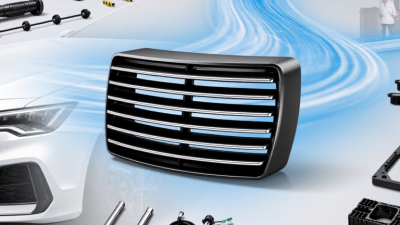
A radiator grille shutter is a set of movable vanes behind the front grille. It controls airflow before that air reaches the radiator and engine bay. During a cold start, the vanes close, helping the engine reach operating temperature sooner. At highway speed, they may remain closed to reduce turbulence. When coolant temperature, air-conditioning pressure, or engine load rises, an electronic actuator opens them.
The system sounds simple. It is not always simple.
The U.S. Department of Energy states that a 10% reduction in aerodynamic drag can improve highway fuel economy by about 2%. This explains the shutter’s value, although real-world results depend on vehicle design, weather, speed, and control software. SAE technical studies also link active grille shutters with faster warm-up and lower drag under controlled conditions. I would not promise the same savings for every vehicle.
For global buyers, examine the actuator seal, vane alignment, operating temperature range, and diagnostic compatibility. A shutter that opens too slowly can cause overheating. One that stays open may increase drag and warm-up time. EPA vehicle testing procedures measure temperature and emissions under defined conditions, but daily traffic is less predictable. Check test records, connector quality, and replacement availability. A quiet motor is useful. A verified fail-safe position matters more.
2026 Best Radiator Grille Shutter for Global Buyers?
What Is a Radiator Grille Shutter and How Does It Work?
A radiator grille shutter is an adjustable set of louvers positioned in front of a vehicle’s radiator.
When the engine is cold, the louvers remain mostly closed to reduce airflow and support faster warm-up.
As coolant temperature and cooling demand increase, the shutters open progressively to direct more air through the radiator.
The values shown are representative control points for a typical liquid-cooled vehicle system; actual settings vary by vehicle calibration, climate, engine load, and driving speed.
Measurement basis: representative coolant-temperature thresholds and corresponding shutter-opening positions used to illustrate the operating principle.
Key Performance Factors for Choosing a 2026 Grille Shutter
2026 Best Radiator Grill Shutter for Global Buyers?
Choosing a 2026 grille shutter requires more than checking its appearance. Thermal control, airflow resistance, durability, and calibration matter equally. The U.S. Department of Energy reports that aerodynamic drag becomes a major energy loss at highway speeds. Its fuel-economy guidance also links lower drag with measurable efficiency gains. Therefore, a shutter should close smoothly during cruising, yet open quickly during climbing, towing, or traffic stops.
Check the actuator response, blade sealing, and pressure-drop data. A practical design should withstand repeated thermal cycling, road salt, dust, and vibration. SAE technical studies commonly evaluate active grille shutters through wind-tunnel testing, cooling performance, and fuel-consumption measurements. However, laboratory gains may shrink in real traffic. Weather, payload, and driving style remain difficult variables. I would not select a product using drag reduction alone. A small cooling restriction can create larger thermal risks. Verify the operating temperature range, fail-safe position, noise level, and communication compatibility before purchase.
Tips:
Request test data at different vehicle speeds and coolant temperatures. Ask for cycle-life results, not only prototype claims. Inspect the hinge area closely; fine dust often settles there. A transparent warranty and traceable quality records also indicate mature engineering. Some buyers may overlook service access. That mistake can become expensive. DOE and IEA fuel-economy guidance both support evaluating whole-vehicle efficiency, rather than judging one component in isolation.
Best Radiator Grille Shutter Types for Different Vehicles
For global buyers in 2026, the best radiator grille shutter depends on vehicle duty, airflow demand, and climate. A fixed grille shutter suits compact cars and older sedans with steady cooling needs. It is simple, affordable, and easier to inspect. However, it cannot adjust airflow during highway driving or heavy traffic.
Active grille shutters fit modern sedans, SUVs, and many electric vehicles. Electric actuators close the slats during cold starts, reducing turbulence around the radiator opening. They open when coolant or battery temperatures rise. The International Energy Agency reported over 17 million electric cars sold worldwide in 2024. This growth increases demand for shutters supporting battery and power-electronics cooling. A hybrid shutter system may suit plug-in hybrids, where engine heat and battery temperature change quickly. Response speed matters. So does sealing quality.
Pickup trucks and commercial vans need stronger designs with wider airflow capacity. Their shutters should resist mud, gravel, snow, and repeated vibration. ACEA’s Vehicles on European Roads report places the average passenger-car age in Europe above twelve years. Replacement buyers should check actuator life, connector protection, and retrofit compatibility. A visually smooth shutter is not automatically better. In practice, some systems become noisy after dust enters the hinges. That detail is easy to miss. Testing airflow at idle, highway speed, and maximum payload conditions gives a more reliable choice.
Global Compatibility, Standards, and Installation Requirements
2026 Best Radiator Grill Shutter for Global Buyers?
Global compatibility starts with vehicle data, not appearance. OICA recorded 93.5 million motor vehicles produced worldwide in 2023. That scale creates many electrical and dimensional variations. A 12-volt actuator is not automatically compatible with every 12-volt vehicle. Check connector design, CAN or LIN communication, mounting depth, blade travel, and radiator airflow before ordering. Small errors matter.
They do.
The IEA Global EV Outlook 2024 reported nearly 14 million electric cars sold in 2023. However, combustion and hybrid vehicles still require careful thermal management. A suitable shutter should support the vehicle’s cooling strategy and fail safely when communication is lost. UNECE Regulation No. 10 guides electromagnetic compatibility, while ISO 16750 covers environmental tests for road-vehicle electrical equipment. These references help buyers evaluate vibration, humidity, temperature, and electrical load performance.
Installation needs more than a replacement grille. Measure the opening with the bumper removed, then confirm clearance near the fan, crash structure, and condenser. Verify actuator calibration after installation. In field checks, installers sometimes trust catalog dimensions too much. That is a mistake. A shutter can fit physically yet restrict airflow or trigger diagnostic faults. ISO 26262 principles are also relevant when the shutter affects engine or battery temperature control, although not every aftermarket component receives full safety validation. Local approval requirements still differ, so technical documentation should be reviewed before shipment.
How to Compare Suppliers, Prices, Warranty, and After-Sales Support
For global buyers, comparing radiator grille shutter suppliers requires more than checking unit price. The IEA Global EV Outlook 2025 reports that electric car sales exceeded 17 million in 2024. This growth increases demand for precise airflow control, even in hybrid and combustion vehicles.
Ask each supplier for cycle-test results, temperature ranges, actuator response time, and sealing performance. ISO 16750 testing can reveal resistance to vibration, dust, water, and temperature changes. IATF 16949 certification is useful, but it does not replace factory audits or sample inspection. Request ten to twenty production samples. Test them cold, hot, and after repeated opening cycles. Real components often behave differently.
Compare landed cost, not only the quoted price. Include tooling, packaging, freight, taxes, spare actuators, and engineering changes. A lower offer may hide expensive calibration work. Warranty terms should specify months, mileage, covered failures, return freight, and claim evidence. A twelve-month warranty sounds weak for a high-cycle assembly. Still, longer coverage is not automatically better.
After-sales support needs measurable service levels. Ask for response time, diagnostic procedures, replacement-part stock, and language support across time zones. A supplier should provide installation drawings and fault codes. Keep records. In my experience, unclear responsibility causes more delays than defective shutters. I may be wrong on one point: laboratory durability cannot fully predict road contamination, especially salt and fine sand. Require field feedback before approving a large order.