Finding reliable China Best Front Door Window Regulator Suppliers requires more than comparing prices and product photos. A dependable supplier should understand vehicle fitment, motor performance, cable routing, and installation accuracy. The Front Door Window Regulator must move smoothly, hold the glass securely, and operate without excessive noise. Small details matter. A weak mounting plate can create vibration after only a few months.
This guide introduces practical methods for assessing Chinese manufacturers and trading companies. It considers production experience, technical documentation, quality controls, sampling procedures, and after-sales support. Buyers should request drawings, compatible vehicle lists, material specifications, and test records before placing larger orders. Factory audits can also reveal useful details, such as assembly cleanliness, spare-part storage, and inspection routines. Certifications may support credibility, but they should be verified rather than accepted automatically.
Experience teaches caution. A polished catalog does not always represent consistent production quality. Some suppliers communicate well but provide limited engineering support. Others offer strong products yet need clearer export documentation. That difference deserves attention. Comparing samples under repeated lifting cycles, temperature changes, and uneven loads can expose problems early. Warranty terms should be written clearly, including response times and replacement responsibilities. No supplier list is perfect, and market conditions change. Therefore, this overview should be used as a starting point, not a final purchasing decision. Reliable sourcing depends on evidence, careful questions, and independent verification.
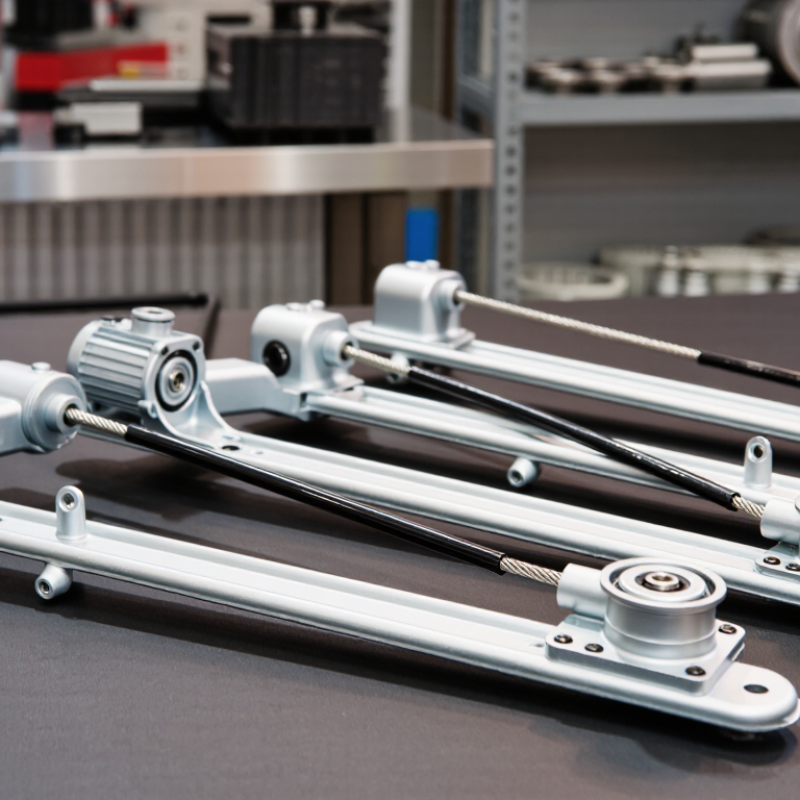
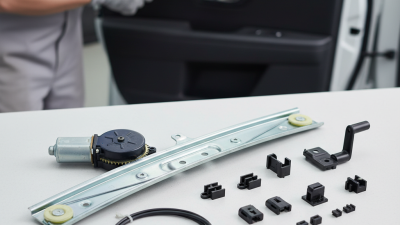
A front door window regulator is the mechanism that moves a vehicle’s side glass up and down. It usually works with an electric motor, lifting arms, cables, guide rails, or a compact gear assembly. The motor creates rotation, while the regulator converts that movement into controlled vertical travel. It is a mechanical translator.
The regulator sits inside the door, behind the trim panel and moisture barrier. When the window switch is pressed, power reaches the motor, and the regulator guides the glass along its channels. A healthy assembly should move smoothly, hold the glass firmly, and stop without grinding or sudden drops. Noise matters. Slow movement may indicate worn cables, dry guides, electrical resistance, or excessive friction. A completely silent window may point to a failed motor, switch, fuse, or wiring fault, not necessarily the regulator itself.
During replacement, technicians should compare mounting points, cable routing, connector design, glass attachment, and left-or-right door position. Small differences can cause poor alignment. The glass may tilt, bind, or leave a gap that allows water and wind noise. Parts suppliers should provide accurate fitment data, corrosion-resistant components, secure fasteners, and clear installation guidance. Quality control is not only about movement tests; repeated cycling can reveal weak gears or stretched cables. Some failures are misdiagnosed, unfortunately, because the motor and regulator are often treated as one part. A careful inspection prevents unnecessary replacement.
Choosing a Chinese window regulator supplier requires more than comparing prices. Check whether the factory produces components in-house or outsources critical parts. Request recent production photos, inspection records, and traceability details for motors, cables, gears, and mounting plates. A clear answer shows stronger process control.
Order samples for practical testing. Measure mounting-hole accuracy with a simple gauge. Listen for grinding sounds during repeated movement. Check lifting speed, cable tension, connector fit, and operation after exposure to moisture and temperature changes. Ask for cycle-test data, but verify the test conditions. Numbers without test details can mislead.
Factory visits can reveal useful evidence. Observe line cleanliness, incoming-material checks, and how rejected parts are labeled. Review quality procedures, trained staff records, and response times for technical questions. I once trusted a polished sample too quickly; later, the production batch showed inconsistent clips. That mistake changed my process. I now inspect several samples from different batches and request a small pilot order before larger purchasing decisions. Communication matters. Suppliers should explain limitations, not promise perfection. A reliable partner also provides stable packaging, accurate shipping documents, and a practical corrective-action report when defects appear.
When comparing front door window regulator suppliers in China, inspect the mechanism, not only the catalog images. Check cable routing, guide rails, gear teeth, motor torque, and mounting-hole accuracy. A reliable sample should move smoothly without clicking, binding, or excessive vibration. Measure lift speed under realistic glass weight. Test both hot and cold conditions, because grease viscosity can change noticeably.
Ask for documented testing procedures and recent results. Useful checks include endurance cycling, corrosion exposure, water resistance, noise measurement, and overload protection. For vehicles with automatic closing systems, confirm anti-pinch performance and reset procedures. Manufacturing controls matter just as much. Look for ISO 9001 quality systems, automotive process controls, incoming-material inspection, and production traceability. PPAP files, process flow charts, control plans, and failure-mode analysis can reveal more than a polished factory tour.
During factory audits, review stamping accuracy, injection-molding consistency, motor assembly, and final inspection records. Confirm that each batch has identifiable lot information. A supplier should explain how it handles failed samples, engineering changes, and warranty feedback. In my experience, small details often predict field reliability. A loose connector can create an intermittent fault months later. A clean sample does not prove stable mass production. Some suppliers provide excellent documents but weak testing discipline. That deserves careful questioning. Also compare packaging strength, spare-part availability, lead times, and communication speed, because a technically strong product can still become difficult to manage.
Choosing a front door window regulator supplier depends on the vehicle, door structure, and repair environment. OEM-tier manufacturers suit passenger cars with strict dimensional requirements. They usually provide precise mounting points, tested cable movement, and stable glass alignment. Their production records also support traceability and quality audits.
Aftermarket specialists can serve older vehicles and common replacement needs. They often offer broad coverage, competitive pricing, and packaged kits with clips or motors. However, buyers should verify compatibility carefully. A regulator may fit the door but still produce excessive noise or uneven travel. Ask for samples, installation data, and cycle-test results before placing large orders.
Commercial vans, taxis, and fleet vehicles need suppliers focused on durability. These suppliers should test repeated opening cycles, vibration, moisture, and temperature changes. Electric vehicle applications may require lighter assemblies and closer coordination with door electronics. Custom engineering suppliers become useful when the window frame, motor position, or cable route differs from standard designs. Check material thickness, gear quality, connector security, and corrosion protection.
Small details matter.
Supplier selection is not only about unit price. It also involves communication speed, production consistency, inspection methods, and after-sales support. Some buyers rely too heavily on catalog images. That approach can fail when real door tolerances differ. Practical testing remains the safer decision.
China Best Front Door Window Regulator Suppliers?
How to Select and Verify the Right Supplier
Selecting a front door window regulator supplier requires more than comparing prices. Start with the supplier’s manufacturing experience, engineering team, and production capacity. Ask for technical drawings, material specifications, and recent quality records. A reliable supplier should explain gear design, cable routing, motor compatibility, and corrosion protection clearly.
Request samples before placing a large order. Install each regulator on the intended door assembly and check movement, noise, alignment, and closing force. Test repeated cycles under different temperatures if possible. Inspect the steel tracks, plastic guides, connectors, and fasteners closely. Small burrs can create serious friction later. Details matter.
Verify the factory, not only the website. Review production equipment, inspection procedures, traceability, and packaging controls through a video call or on-site audit. Confirm that the supplier can meet applicable vehicle safety and quality requirements. Check whether inspection reports match the actual sample. They sometimes do not. A written agreement should define tolerances, labeling, delivery terms, replacement procedures, and responsibility for defects.
Communication is another practical test. Send one detailed question and measure the response. Vague answers signal future problems. A supplier may offer an attractive quotation, yet weak documentation can increase total cost. I would also compare at least three qualified suppliers, because the cheapest option is rarely the safest choice. No supplier is perfect. The goal is transparent evidence, consistent samples, and steady performance.
| Evaluation Dimension | What to Check | Verification Evidence | Practical Acceptance Benchmark | Suggested Weight |
|---|---|---|---|---|
| Product Fitment | Compatibility with the exact vehicle platform, front-door position, left-hand or right-hand drive configuration, and manual or powered operation. | Approved engineering drawing, vehicle application list, mounting-point drawing, connector specification, and sample installation on the target door assembly. | All critical mounting points, cable routing, glass travel, connector position, and operating direction must match the approved design. | 15% |
| Construction and Materials | Quality of the regulator plate, guide rails, cables, gears, rollers, fasteners, plastic components, and protective coatings. | Bill of materials, material specifications, incoming-inspection records, coating specifications, and samples from the intended production process. | Material grades and surface treatments should be defined in controlled documents and remain consistent between sample and mass production. | 10% |
| Operating Performance | Smooth glass movement, lifting capacity, operating noise, travel speed, end-stop behavior, and resistance to abnormal loading. | Test report using the target glass weight and installation geometry; repeated up-and-down cycling; noise and current measurements where applicable. | No binding, cable derailment, abnormal noise, or loss of travel after the agreed cycle and load tests. | 15% |
| Motor and Electrical Compatibility | Motor voltage, connector pinout, polarity, thermal protection, current draw, electromagnetic compatibility, and compatibility with the vehicle control system. | Motor datasheet, wiring diagram, connector drawing, electrical test results, and bench testing with the intended switch or control module. | Electrical parameters must match the approved vehicle specification, with no overheating, intermittent operation, or connector mismatch. | 10% |
| Durability Testing | Resistance to repeated operation, vibration, temperature variation, moisture, dust, and door-slam-related shock. | Laboratory test plan, test samples with traceable batch numbers, cycle records, failure analysis, and corrective-action reports. | The product should pass the customer-approved durability protocol without structural damage or unacceptable performance loss. | 15% |
| Corrosion Protection | Protection of steel components, fasteners, cable ends, brackets, and other exposed areas against humidity and road-salt conditions. | Coating or plating specification, surface-treatment process record, thickness inspection, and a salt-spray or cyclic-corrosion report based on the agreed method. | No functional corrosion, seized moving parts, coating delamination, or cable deterioration during the contractual corrosion test. | 8% |
| Quality Management | Control of incoming materials, production processes, nonconforming products, measurement equipment, and corrective actions. | Current quality-management certificate, process flow chart, control plan, inspection standard, calibration records, and sample production records. | Documented quality procedures should cover traceability from incoming material through final inspection and shipment. | 10% |
| Production Capacity | Available assembly lines, tooling capability, in-house or controlled processes, production capacity, and peak-season flexibility. | Factory audit, equipment list, monthly capacity statement, production schedule, bottleneck analysis, and evidence from comparable programs without disclosing confidential customer information. | Capacity should cover forecast demand with additional allowance for launch fluctuations and planned maintenance. | 7% |
| Tooling and Engineering Support | Ability to manage design changes, prototypes, tooling maintenance, engineering validation, and replacement-part development. | Tooling ownership terms, engineering-change procedure, prototype lead-time record, drawing revision history, and tooling maintenance plan. | Engineering changes must use revision control, approval records, and clear responsibility for tooling and validation costs. | 5% |
| Sample Approval | Whether pre-production samples are made using the same materials, tooling, process settings, and inspection standards planned for mass production. | Sealed sample approval record, dimensional report, functional test report, packaging specification, and retained reference sample. | The approved sample must be uniquely identified and used as the reference for future production inspections. | 5% |
| Traceability and Documentation | Ability to trace product batches, raw materials, operators, inspection results, packaging labels, and shipment records. | Lot-code format, production traveler, final-inspection report, barcode or label specification, and retention-period procedure. | Each shipment should be traceable to a production date, batch, inspection result, and approved product revision. | 5% |
| Packaging and Logistics | Protection against deformation, moisture, abrasion, connector damage, and mixed-part errors during storage and international transport. | Packaging drawing, drop or vibration evaluation where required, carton identification, pallet plan, and loading photographs. | Packaging must prevent bent rails, damaged cables, scratched surfaces, and incorrect left/right or front/rear mixing. | 3% |
| Commercial Reliability | Quotation clarity, minimum order quantity, tooling charges, lead time, payment terms, warranty terms, and response time. | Signed quotation, technical-commercial specification, production lead-time commitment, warranty policy, and written change-notification terms. | All prices, assumptions, tooling ownership, delivery terms, warranty coverage, and change-control responsibilities should be written into the purchase agreement. | 2% |