Request a Quote
ma
Leave Your Message

How to Choose a Window Glass Motor in 2026?

Choosing a Window Glass Motor in 2026 is no longer a simple parts-matching task. Modern vehicles use tighter door structures, quieter cabins, and smarter body-control systems. A motor that fits the mounting holes may still fail electronically or operate noisily.

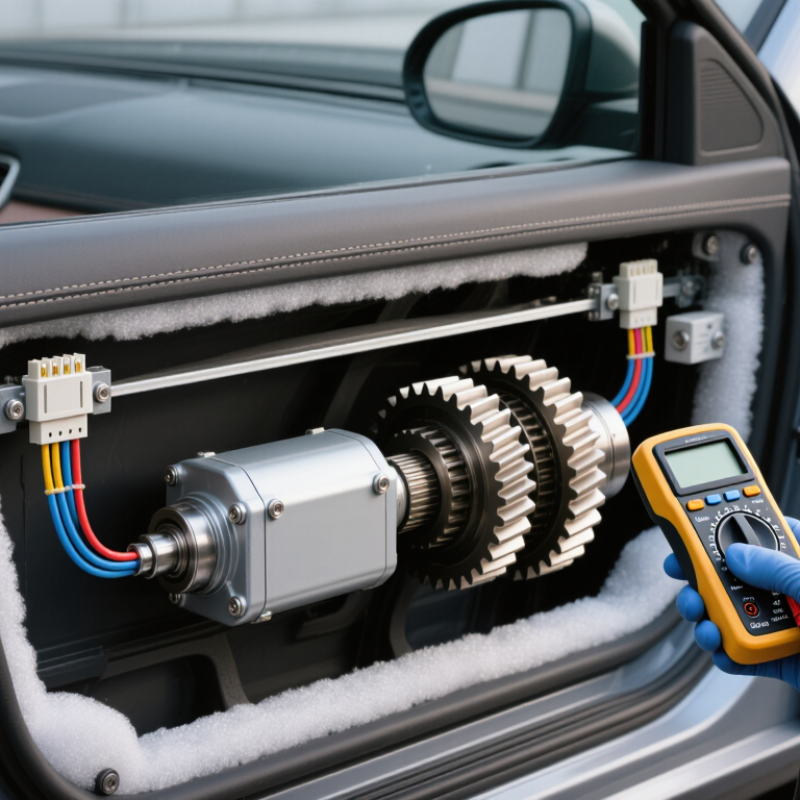
This guide examines the details that experienced technicians check before installation. These include vehicle compatibility, connector design, gear material, lifting capacity, operating speed, and current draw. A practical inspection matters. Look for stripped teeth, overheated wiring, uneven glass movement, or a clicking sound near the regulator. Small clues often reveal larger problems. Measure twice.

Reliable selection should begin with verified information. Compare the original equipment number with the supplier’s catalog, vehicle build date, and door configuration. Read installation instructions carefully, especially when the motor requires initialization or anti-pinch calibration. In 2026, some replacement units may communicate with electronic control modules, so “universal” does not always mean fully compatible. That label can mislead.

Quality also depends on testing and after-sales support. Reputable manufacturers should provide material details, performance data, warranty terms, and traceable quality procedures. Independent reviews can help, but they should not replace technical documentation. A cheaper motor may seem attractive until a slow window strains the regulator or leaves the glass partly open during rain. Not every failure is obvious.

The right choice balances fit, safety, durability, noise, and total ownership cost. Still, no guide can predict every vehicle condition. Corrosion, damaged tracks, and weak switches may affect performance. A careful decision leaves room for inspection, professional judgment, and reconsideration before purchase.

How to Choose a Window Glass Motor in 2026?

Identify the Window Glass Motor Type and Vehicle Compatibility

How to Choose a Window Glass Motor in 2026?

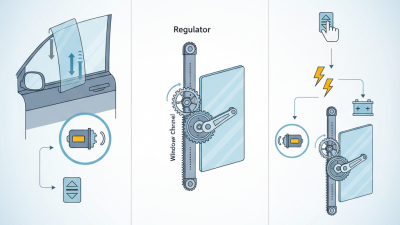
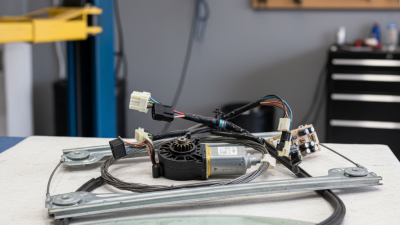
Identify the motor type before comparing prices. Most replacement systems use a 12-volt DC motor, but the motor may be sold alone or attached to a complete window regulator. Cable-driven regulators need different mounting points from scissor-style regulators. Check the plug shape, pin count, gear housing, mounting holes, and motor direction.

Vehicle compatibility requires more than a model name. Match the production year, body style, door position, and left- or right-hand side. A front-door motor may not fit a rear door, even when the vehicle name is identical. Confirm the vehicle identification number when possible. Also check one-touch operation, anti-pinch sensors, and electronic control compatibility. A wrong connector can leave the glass stuck halfway.

The Auto Care Association’s 2024 Factbook reports that the average U.S. light vehicle is about 12.6 years old. That age increases variation between factory-installed systems and later replacements. OICA reported global motor vehicle production above 93 million units in 2023, creating a large but highly mixed replacement market. Catalog data is not flawless. I would compare photos with the removed motor, then measure the connector and bolt spacing. Small differences matter. A quiet motor can still be incompatible. Test the regulator movement before closing the door panel.

How to Choose a Window Glass Motor in 2026?

Identify the window glass motor type and match it with the vehicle’s electrical platform before checking connector shape, mounting points, gear direction, and regulator compatibility.

Cable-Type Regulator

Common in modern passenger vehicles. Uses a flexible cable and drum to move the glass carrier.

Scissor-Type Regulator

Uses intersecting arms and is often found in older or mechanically simpler door designs.

Electrical Compatibility

Passenger cars and light commercial vehicles commonly use 12 V systems, while many heavy commercial vehicles and buses use 24 V systems.

The chart shows typical nominal vehicle electrical-system voltages. Always verify the original motor voltage, connector, polarity, mounting pattern, glass travel direction, and regulator assembly before installation.

Compare Motor Power, Speed, Noise, and Operating Performance

How to Choose a Window Glass Motor in 2026?

Power is not the same as useful performance. A motor with high wattage may still struggle against dry seals, winter grease, or misaligned glass. Check torque under rated load, not only peak current. The U.S. Department of Energy reports that windows can influence roughly 25%–30% of residential heating and cooling energy use, so smooth sealing and accurate closing matter beyond convenience. For vehicle applications, compare current draw at 12–14 volts and record heat buildup during repeated cycles.

Speed should be measured across the complete glass travel. An unloaded test can look impressive, but it hides real resistance. Record opening time, closing time, and the final locking action. Lower noise is valuable, yet dB(A) figures mean little without the same distance and test room. ISO 3744 provides a reliable method for comparing airborne sound power. Listen for gear chatter, dry bearing tones, and a harsh stop. Small sounds often reveal larger mechanical problems.

Test it cold. Test it warm. FMVSS 118 also highlights the importance of safe power-window operation and anti-entrapment behavior. A practical evaluation should include voltage drop, stall protection, cycle durability, and recovery after overload. I would not choose the fastest motor automatically. Excessive speed can increase impact noise and seal wear. A quieter motor with moderate speed may perform better, although this judgment depends on the glass weight and installation accuracy.

Check Electrical Requirements, Mounting Design, and Connector Fit

How to Choose a Window Glass Motor in 2026?

Choose a window glass motor by checking electrical requirements first. Confirm its rated voltage, operating current, and stall current. A 12-volt motor is not automatically suitable for every 12-volt vehicle. Measure current during upward travel, especially near the glass seal. A motor that fits physically may still overload a fuse or control module. Check polarity, duty cycle, thermal protection, and whether the system uses switched power or PWM control.

The IEA Global EV Outlook 2024 reported more than 14 million electric car sales in 2023. This growing electrical diversity makes voltage and control compatibility more important.

Mounting design must match the regulator, glass load, and door structure. Compare bolt spacing, gear position, shaft direction, and motor handedness. Even a few millimeters can create gear noise or uneven glass movement. Inspect the mounting surface for cracks, rust, and distorted holes.

The OICA 2023 production statistics recorded about 93.5 million vehicles produced worldwide. That scale creates many similar-looking parts with different mounting details. Similar is not identical.

Connector fit deserves a physical test. Match terminal count, keying, lock position, wire polarity, and sealing depth. Never force a connector into place. Check whether the vehicle expects feedback signals or anti-pinch control. NHTSA’s FMVSS 118 addresses power-window controls and automatic-reversal provisions. Follow the vehicle service information carefully.

A small pinout mistake can damage the controller. I would still verify every wire twice. Catalog drawings can be incomplete.

Evaluate Durability, Safety Features, Warranty, and Certification

How to Choose a Window Glass Motor in 2026?

A reliable window glass motor should survive repeated movement, vibration, moisture, and temperature changes. Check its rated cycle count, operating load, and housing material before comparing prices. In practical testing, smooth movement matters more than impressive speed. Listen for grinding, hesitation, or uneven lifting. These signs can reveal weak gears or poor alignment. Ask whether the motor has passed endurance testing under realistic window weight.

Safety features deserve close attention. Look for anti-pinch protection, overload shutdown, thermal protection, and controlled closing speed. These features can reduce injury risks and protect the motor when glass meets an obstacle. Manual release access is also useful during power loss. I once focused too heavily on torque and overlooked stopping behavior. That was a poor evaluation. A stronger motor is not automatically safer.

Read the warranty conditions carefully. Confirm coverage length, replacement procedures, labor limits, and exclusions for incorrect installation or water damage. A clear warranty often reflects better engineering discipline, but it is not proof by itself. Request certification documents and verify the testing organization, product model, and applicable safety standard. Do not rely on a printed logo alone. Certification details can be outdated or incomplete. Installation records, serial numbers, and inspection photos also support future claims. Leave room for doubt. A product may perform well in a showroom yet fail after months of daily use.

Match the Motor to Your Budget, Tools, and Installation Needs

Choosing a window glass motor in 2026 starts with your actual installation conditions, not the lowest online price. Check the vehicle’s year, door position, connector shape, voltage, and regulator compatibility. A motor with incorrect torque may move slowly, strain the cables, or stop halfway. Measure twice.

Your budget should include tools and possible replacement clips. A basic motor may suit a careful installer with trim tools, a socket set, a multimeter, and enough time. Professional-grade equipment is useful when the door has limited access or damaged wiring. Test the original switch and wiring before ordering. Otherwise, you might replace a working motor unnecessarily.

Installation experience matters. If the glass must be supported by wedges, prepare them before removing the inner panel. Keep screws in labeled containers; door hardware often looks identical but is not. A reliable motor should move smoothly, hold the glass securely, and avoid excessive heat during repeated tests. Read the fitting instructions, even if the repair seems familiar. Manuals can be incomplete, and real doors sometimes differ from diagrams. I once assumed a connector would match because the motor looked identical; it did not. That mistake cost time, not safety, but it changed how I verify parts. Choose the motor that matches your tools, patience, and repair confidence.

How to Choose a Window Glass Motor in 2026? — Match the Motor to Your Budget, Tools, and Installation Needs
Motor Option Typical Budget Range Suitable Window Type Typical Load and Travel Tools Usually Required Installation Difficulty Best Match Important Selection Notes
12 V DC Linear Actuator US$40–US$120 per window, excluding wiring and controls Small to medium awning, top-hung, louver, or vent windows Approximately 100–300 N; common stroke lengths of 100–300 mm Drill, screwdrivers, tape measure, wire stripper, crimping tool, and a 12 V power supply Moderate Best for DIY budgets Choose a weather-resistant housing and confirm that the actuator has enough stroke to open the sash to the required angle.
24 V DC Linear Actuator US$70–US$180 per window, excluding controls Medium to large awning, hopper, roof, and ventilation windows Approximately 300–800 N; common stroke lengths of 200–600 mm Drill, mounting template, multimeter, low-voltage wiring tools, and a 24 V power supply Moderate Best for larger glass panels Lower current at the same power can simplify longer cable runs. Verify the power supply capacity and the actuator's duty cycle.
Chain Window Opener US$80–US$220 per window, excluding controls Top-hung, bottom-hung, awning, and clerestory windows with limited clearance Often 200–400 N; chain travel commonly 200–500 mm Screwdriver, drill, level, measuring tape, and basic electrical tools Moderate Best for compact installations Check the chain direction, sash geometry, and available frame depth. It is not automatically suitable for heavy or poorly balanced glass sashes.
Rack-and-Pinion Window Motor US$150–US$400 per window, excluding controls Large top-hung or outward-opening windows in commercial or high-cycle applications Approximately 300–1,000 N; travel depends on rack length Drill, accurate alignment tools, torque screwdriver, multimeter, and secure access equipment Advanced Best for durability and repeated use Requires careful alignment between the rack and drive unit. Confirm frame strength and use a suitable safety control for powered windows.
Spindle Window Motor US$180–US$450 per window, excluding controls Heavy-duty top-hung, side-hung, and smoke-ventilation windows Approximately 500–1,500 N; travel commonly 300–800 mm Drill, precise mounting tools, multimeter, torque checks, and professional access equipment Advanced Best for heavy glass and high loads Use only after checking sash weight, hinge condition, opening angle, and the frame's ability to transfer actuator forces.
AC Chain or Linear Operator US$180–US$500 per window, excluding mains wiring and controls Large commercial windows, high-level ventilation openings, and fixed building-control systems Commonly 300–1,000 N, depending on the model and application Drill, electrical test equipment, conduit tools, isolation equipment, and qualified mains installation Advanced Best for fixed building systems Mains-voltage wiring should be designed and installed according to local electrical regulations by a qualified professional.
Solar-Powered 12 V/24 V Kit US$180–US$600 per window, including a small panel, battery, and controller Remote sheds, greenhouses, off-grid rooms, and windows where new power cables are difficult to install Usually 100–500 N; performance depends on battery capacity and sunlight Drill, mounting hardware, multimeter, wire tools, and weatherproof cable glands Moderate to advanced Best when grid power is unavailable Size the battery for cloudy periods and repeated daily cycles. Protect outdoor connections from moisture and ultraviolet exposure.
Smart Motor with Position or Obstruction Feedback US$150–US$450 per window, excluding hub, sensors, and wiring Residential or light-commercial windows requiring scheduling, remote control, or integration with sensors Typically 100–800 N; travel varies by motor type Basic mechanical tools, multimeter, network or control-system setup, and commissioning equipment Moderate to advanced Best for automation and monitoring Confirm compatibility with the control protocol, local connectivity, manual override, rain sensors, and anti-pinch or obstruction protection.
Low-Cost Basic Actuator US$25–US$60 per window Lightweight indoor vents or small, infrequently operated windows Often 50–200 N; shorter travel is common Drill, screwdriver, tape measure, and basic low-voltage wiring tools Easy to moderate Budget-only applications Check noise, weather resistance, limit switches, duty cycle, and return policy carefully. Avoid using it on heavy glass or safety-critical openings without testing.
Manual Chain Winder US$20–US$80 per window Small windows where powered operation is unnecessary Human-operated; load depends on gearing and hardware condition Screwdriver, drill, level, and measuring tape Easy Best for the lowest total cost It is not a motor, but it can be the better choice when there is no need for remote control, automatic ventilation, or frequent operation.
Professional Multi-Window Control System US$500–US$2,000+ for a small installation, depending on the number of windows and controls Schools, offices, greenhouses, smoke-ventilation systems, and buildings with centralized automation Selected individually; often 300–1,500 N per window Electrical test equipment, control-panel tools, access equipment, commissioning software, and documented wiring Advanced Best for coordinated building control Plan power distribution, emergency operation, manual override, sensor logic, maintenance access, and local fire or electrical requirements before purchase.
Retrofitting an Existing Motor US$60–US$250 per window for motor and mounting parts, excluding repairs Existing motorized windows with compatible brackets, wiring, and control hardware Must match the original force, stroke, voltage, and mounting geometry Multimeter, screwdrivers, drill, calipers or measuring tools, and wiring tools Moderate to advanced Best only with verified compatibility Do not select by voltage alone. Match force, stroke, connector type, limit-switch behavior, mounting centers, duty cycle, and control signals.