How to Choose the Right Active Radiator Shutter?
Choosing the right Active Radiator Shutter requires more than comparing opening angles, actuator brands, or catalog prices. The component must balance airflow, cooling demand, aerodynamic drag, noise, reliability, and service access. A shutter that saves energy on a highway may restrict airflow during a steep climb. That trade-off matters.
The U.S. Environmental Protection Agency’s Automotive Trends Report shows that modern vehicles increasingly combine lower drag with advanced powertrain controls. Its data places recent average new-vehicle aerodynamic drag near a 0.29 drag coefficient, although results vary by class and body design. The U.S. Department of Energy also explains that reducing aerodynamic resistance can improve fuel economy, especially at highway speeds. These figures support the technology, but they do not justify choosing the same shutter for every vehicle.
Dr. Giorgio Rizzoni, an automotive engineering researcher at Ohio State University, has stated, “Aerodynamics is one of the most important factors affecting vehicle energy consumption.” That principle guides this article. However, it should not be treated as a complete design rule. Real selection depends on grille geometry, radiator pressure drop, actuator response time, sealing quality, ice exposure, and diagnostic strategy. Small details matter. A cold morning can reveal weak sealing. Dust can expose poor hinge design. The best Active Radiator Shutter is therefore not simply the lightest or cheapest option. It is the system that delivers measurable drag reduction while protecting engine or battery cooling under real operating conditions. The choice may still be imperfect. Testing must show why.

Understanding How Active Radiator Shutters Work
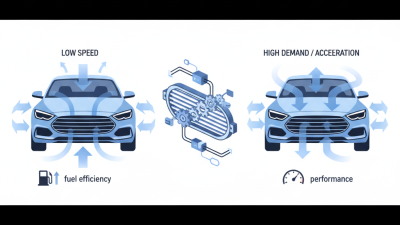
Choosing an active radiator shutter starts with understanding its working logic. The shutter uses an electric actuator and control unit to open or close airflow louvers. It closes during steady highway driving, reducing turbulence around the radiator opening. It opens when coolant temperature, condenser pressure, or engine load rises. Small temperature changes can alter its position.
The U.S. Department of Energy’s Vehicle Technologies Office reports that aerodynamic drag can consume roughly half of a vehicle’s energy at highway speeds. SAE technical literature also reports drag reductions of about 2–5% in controlled shutter tests, although results vary by vehicle shape and test conditions. These figures are useful, not universal. Real roads are messier. Wind, rain, mud, and stop-and-go traffic change performance.
A suitable shutter should match the cooling system’s airflow demand, actuator torque, sealing quality, and operating temperature range. Check whether it provides position feedback and a fail-safe open mode. A shutter that closes too early may create excessive heat near a blocked radiator. One that stays open wastes aerodynamic potential. The International Energy Agency’s vehicle efficiency analyses repeatedly connect thermal management with lower energy consumption, especially in electrified vehicles. That matters. Choose through vehicle-level testing, not catalogue dimensions alone. The overlooked detail is calibration. Even a well-built shutter can perform poorly when its control map is incomplete.
Identifying Vehicle Cooling and Efficiency Requirements
Choosing the right active radiator shutter starts with the vehicle’s cooling and efficiency requirements, not appearance. The system must protect engine, transmission, battery, and air-conditioning performance under real operating conditions. Measure coolant temperature, fan duty, grille airflow, and pressure drop during testing. Include steep grades, towing, stop-and-go traffic, and ambient temperatures above 35°C. A shutter that stays closed too long may improve aerodynamics but restrict necessary cooling.
The U.S. Environmental Protection Agency’s Automotive Trends Report tracks steady improvements in new-vehicle fuel economy and CO2 performance. This supports careful airflow management, although shutters alone cannot deliver large efficiency gains. SAE technical studies commonly report aerodynamic drag reductions near one or two percent when grille openings are managed effectively. Results vary with vehicle shape, speed, and control calibration. Highway driving benefits most. City gains may be smaller. That distinction is often overlooked.
Tips: Define the cooling target first. Ask for validated opening temperatures, response time, actuator life, and fail-safe behavior. Check performance with mud, ice, dust, and damaged louvers. The International Energy Agency’s Global Fuel Economy Initiative also emphasizes testing efficiency under representative driving conditions, not laboratory assumptions alone. Use wind-tunnel data with road tests. A practical test should record shutter position beside coolant temperature and vehicle speed. A small calibration error can create heat-soak problems after a long climb. This is where engineering judgment still matters.
How to Choose the Right Active Radiator Shutter?
Identifying Vehicle Cooling and Efficiency Requirements
This comparison uses representative engineering reference values for common vehicle categories.
Passenger vehicles generally offer greater aerodynamic and warm-up benefits from active shutters,
while SUVs and light commercial vehicles require higher airflow capacity under towing, payload,
and low-speed operating conditions. Final shutter sizing should be validated through thermal,
aerodynamic, and durability testing.
Comparing Shutter Designs, Materials, and Control Systems
How to Choose the Right Active Radiator Shutter?
Active radiator shutters differ in airflow control, durability, and packaging needs. Louvered shutters suit precise opening changes and compact front-end spaces. Roller shutters provide smooth coverage but need careful guidance during repeated movement. Sliding panels can resist debris well, although their tracks may collect mud and ice. No design wins everywhere.
Material selection affects weight, corrosion resistance, and operating temperature. Aluminum offers low mass and useful heat tolerance. Coated steel provides greater stiffness but adds weight and may need edge protection. Engineering polymers reduce noise and simplify complex shapes. However, polymers can lose strength after prolonged heat exposure. I would always compare laboratory results with road testing. Paper specifications can hide real weaknesses.
Control systems should match the vehicle’s thermal strategy. A thermal actuator is simple and economical, but response is less flexible. An electric motor allows staged positioning through temperature, speed, and pressure signals. Closed-loop feedback can detect incomplete movement and reduce service risks. Yet sensors and wiring introduce failure points. Keep diagnostics practical. During calibration, check movement at cold start, heavy traffic, and highway speed. A shutter that works perfectly in a workshop may hesitate after dust, salt, or repeated vibration. The best choice balances airflow accuracy, material behavior, control complexity, and realistic maintenance access.
Evaluating Compatibility, Durability, and Maintenance Needs
An active radiator shutter should fit the vehicle’s cooling system, not merely its available space.
Check the opening width, mounting points, actuator position, and electrical requirements before ordering. The shutter must also communicate correctly with the vehicle control system. A small mismatch can cause warning lights, restricted airflow, or unstable engine temperatures. Confirm operating temperature ranges and connector specifications. These details matter.
Durability depends on heat, vibration, moisture, and road debris.
Choose materials that tolerate repeated temperature changes without warping. For exposed positions, verify sealing and ingress protection information. Road salt is especially troublesome. Inspect the blades, hinges, and actuator housing for weak points. A reinforced frame may last longer, but it can add weight and stress to the mounting area. My first selection focused too much on strength. I underestimated access for repairs.
Maintenance should be practical, not theoretical.
Look for shutters with visible fasteners and replaceable actuator components. Keep the blades free from leaves, dust, and frozen residue. A simple inspection can reveal uneven movement or unusual noise. Test the shutter during scheduled servicing, especially after winter driving. If movement becomes slow, check for contamination before replacing parts. Service intervals should follow the vehicle’s conditions, not only a calendar. Record inspection findings and temperature-related faults. That record supports better decisions later. Loose wiring or a slightly bent blade may seem minor, but both can reduce airflow control.
Selecting the Right Active Radiator Shutter for Your Vehicle
Selecting the Right Active Radiator Shutter for Your Vehicle
An active radiator shutter should match the vehicle’s thermal demands, airflow path, and control strategy. The U.S. Department of Energy explains that aerodynamic drag rises with the square of vehicle speed. At highway speeds, it can consume more than half of engine power. A properly sized shutter can reduce unnecessary airflow without starving the radiator.
Start with the cooling package, not the shutter opening.
Measure radiator thickness, condenser position, fan clearance, and underbody airflow. Check performance during towing, steep climbs, stop-and-go traffic, and cold starts. The U.S. Environmental Protection Agency’s 2023 Automotive Trends Report recorded average new-vehicle fuel economy at 27.2 miles per gallon for model year 2022. Small aerodynamic gains still matter across millions of vehicles.
Choose an actuator with suitable torque, sealing, temperature tolerance, and diagnostic feedback. A shutter that moves slowly may create thermal risk during sudden load changes. A stronger actuator may increase cost and electrical demand. That trade-off is easy to overlook. Validate the assembly in dust, ice, road splash, and repeated cycling. SAE technical guidance also supports testing airflow and thermal behavior under realistic operating conditions, rather than relying only on laboratory simulations. I would not trust a perfect computer model alone. Real debris changes everything. A fail-safe open position, clear fault detection, and serviceable mounting points make the system more dependable.